- +91-98101-85443
- sales@vertexsolutions.co.in
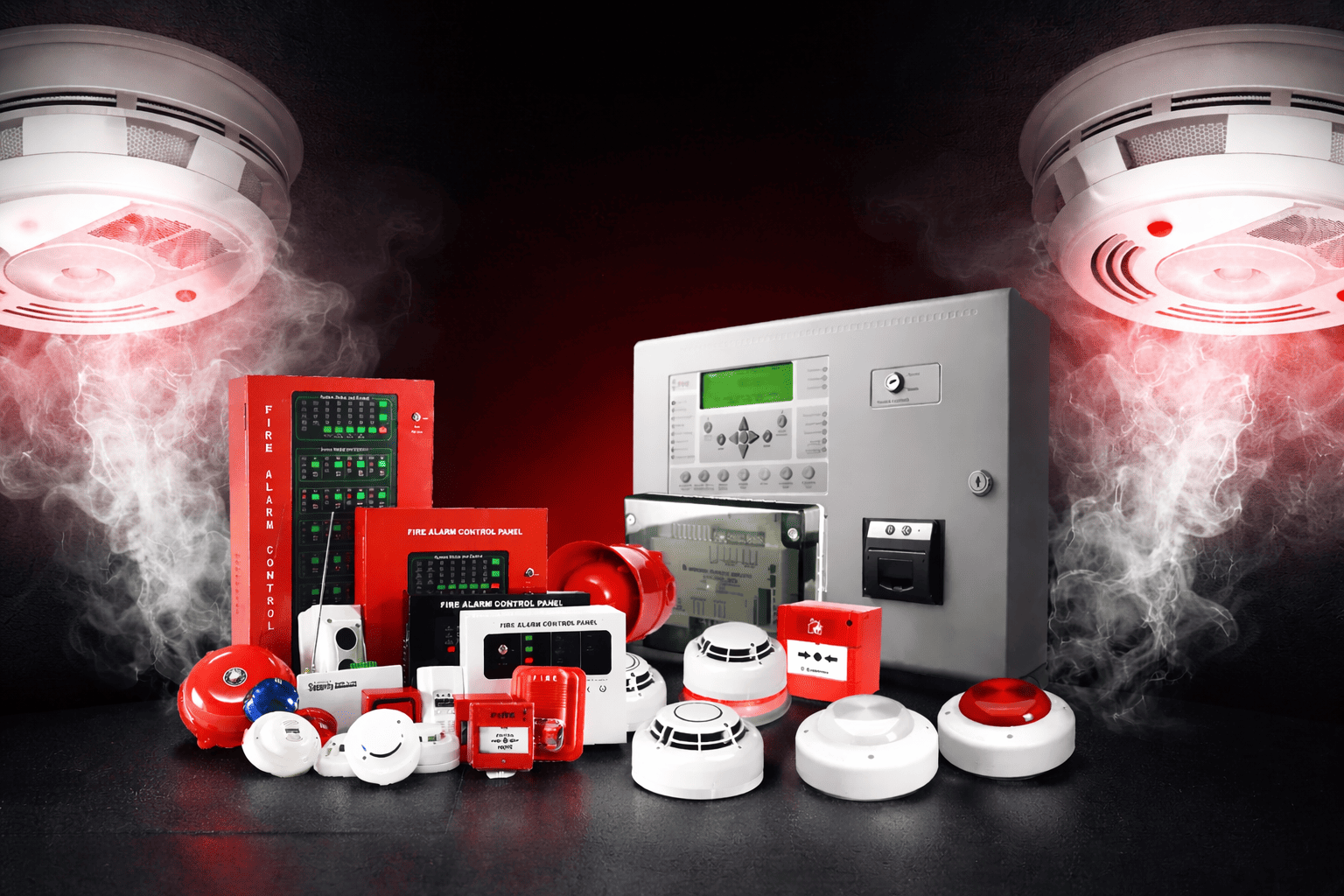
A fire alarm system is a network of devices designed to detect smoke, heat, or fire and alert people inside a building. The main purpose of a fire alarm system is to save lives, reduce property damage, and provide early warning during fire emergencies.
These systems are commonly installed in:
When the system detects smoke or heat, it activates alarms such as sirens, hooters, speakers, and flashing lights to alert occupants.
The control panel is the brain of the fire alarm system. It receives signals from detectors and controls the entire system.
Functions:
Smoke detectors identify smoke particles in the air and trigger the alarm. They provide early warning before the fire spreads.
Types of Smoke Detectors:
Heat detectors activate when the temperature increases beyond a certain limit. They are commonly used in kitchens and industrial areas.
A manual call point allows people to activate the fire alarm manually during an emergency by pressing or breaking the glass unit.
These devices produce loud sounds and flashing lights to warn people about fire emergencies.
Fire alarm systems include backup batteries to keep the system operational during power failures.
This system divides the building into multiple zones. It is suitable for small and medium-sized buildings.
Advantages:
Each device in this system has a unique address, making it easier to identify the exact fire location.
Advantages:
Wireless systems use radio communication instead of cables. These systems are easy to install and suitable for modern buildings.
Intelligent systems use advanced sensors and algorithms to reduce false alarms and improve detection accuracy.
Fire alarm systems are essential for protecting human life and property. They provide early warning and help reduce fire damage.
Benefits:
Fire alarm systems are widely used in:
Feature | Conventional System | Addressable System |
Detection | Zone-based | Device-based |
Accuracy | Medium | High |
Cost | Lower | Higher |
Suitable For | Small buildings | Large buildings |
Maintenance | Simple | Advanced |
To ensure proper operation:
Regular maintenance improves system performance and reduces false alarms.
Modern fire alarm systems are becoming smarter with:
These technologies improve safety and emergency response.
The main purpose is to detect fire early and warn people to evacuate safely.
Addressable fire alarm systems are considered better for large buildings because they provide accurate fire location details.
Yes, fire alarm systems include backup batteries for emergency operation.
They are used in offices, industries, warehouses, hospitals, schools, hotels, and commercial buildings.
A fire alarm system is an essential safety solution for protecting lives and property from fire hazards. Whether it is a small office or a large industrial facility, installing a reliable fire alarm system helps ensure early fire detection, quick evacuation, and improved safety.
Modern fire alarm systems provide advanced protection with smart detection technology, emergency alerts, and automated safety controls. Investing in a quality fire alarm system is one of the most important steps toward building safety and fire prevention.
Get professional CCTV installation and security system solutions for your business. Our experts help you choose the right surveillance system for maximum protection.

Delivering advanced security and surveillance solutions including CCTV systems, fire safety, access control, and building automation for commercial and industrial projects.
We ensure safety, reliability, and smart monitoring with cutting-edge technology. short this content more same i give you
+91-98101-85443